No Bad Parts
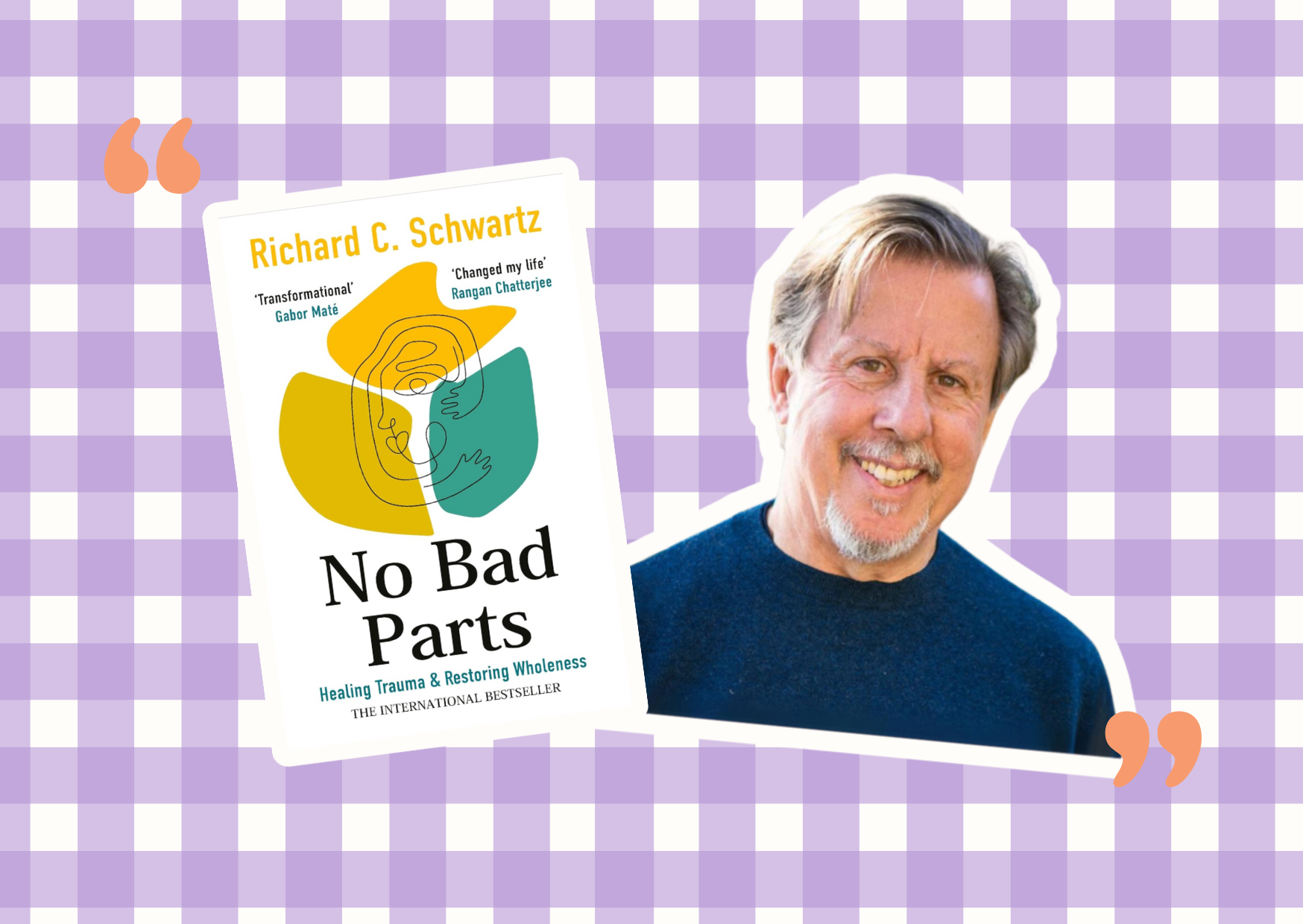
No Bad Parts by Richard Schwartz
Why the Being Human Team loves this book:
I think we’ve all had times where we’ve felt like we’re at war with ourself? Like one part of you wants to move forward while another keeps hitting the brakes?
The book introduces Internal Family Systems (IFS) therapy, which suggests we're all made up of different "parts", like an internal family. There's the part that wants to stay in bed, the part pushing you to work harder, the anxious part, the critical part. Sound familiar? Every single one of these parts, even the ones making your life harder, is actually trying to help you. Yes, even that harsh inner critic.
Schwartz explains that many difficult behaviors come from "protector" parts—internal bodyguards that developed to keep you safe from pain or rejection. Maybe you have a people-pleasing part or a perfectionistic part. They might cause problems now, but they showed up with good intentions.
This reframing is huge. Instead of beating yourself up, you can approach struggles with curiosity: "What is this part trying to protect me from?"
Beyond all these parts exists what Schwartz calls the "Self"; the calm, compassionate, wise center in everyone. The goal of IFS isn't to eliminate parts, but to let your Self lead, creating an internal environment where all parts feel heard and can relax.
The book includes practical exercises and real examples to help you work with your own parts. Schwartz also addresses trauma sensitively, showing how IFS can help people heal without being re-traumatised.
In a world that tells us to "fix" ourselves, No Bad Parts offers something different: acceptance and curiosity. Healing comes not from eliminating parts of yourself, but from understanding them and building internal trust.
The Big Idea: You're Not Broken, You're Just Complex
Our favourite quotes from the book:
“Trauma isn’t just the sadness that comes from being beaten, or neglected, or insulted. That’s just one layer of it. Trauma also is mourning the childhood you could have had. The childhood other kids around you had. The fact that you could have had a mom who hugged and kissed you when you skinned your knee. Or a dad who stayed and brought you a bouquet of flowers at your graduation. Trauma is mourning the fact that, as an adult, you have to parent yourself. You have to stand in your kitchen, starving, near tears, next to a burnt chicken, and you can’t call your mom to tell her about it, to listen to her tell you that it’s okay, to ask if you can come over for some of her cooking. Instead, you have to pull up your bootstraps and solve the painful puzzle of your life by yourself. What other choice do you have? Nobody else is going to solve it for you.”
“Here’s a theory: Maybe I had not really been broken this whole time. Maybe I had been a human—flawed and still growing but full of light nonetheless.”
“So this is healing, then, the opposite of the ambiguous dread: fullness. I am full of anger, pain, peace, love, of horrible shards and exquisite beauty, and the lifelong challenge will be to balance all of those things, while keeping them in the circle. Healing is never final. It is never perfection. But along with the losses there are triumphs. I accept the lifelong battle and its limitations now. Even though I must always carry the weight of grief on my back, I have become strong.”